Cummins ISX Valve Adjustment: A Comprehensive Guide
Cummins ISX valve adjustment PDF resources, including engineering and transportation details, are available online via QuickServe, offering comprehensive instructions for engine maintenance.
Understanding the ISX Engine & Valve Adjustment Importance
Cummins ISX engines, renowned for their durability and power in heavy-duty applications, require meticulous maintenance, with valve adjustment being paramount for optimal performance and longevity. Proper valve lash ensures efficient combustion, maximizing fuel economy and minimizing emissions. Neglecting this crucial service leads to reduced engine power, increased wear on valve train components, and potentially catastrophic engine failure.
PDF resources, like those found on QuickServe, detail the intricate workings of the ISX, emphasizing the importance of precise adjustments. These manuals provide step-by-step instructions, diagrams, and specifications tailored to specific ISX models. Understanding the engine’s design and the impact of valve timing is vital for technicians performing these adjustments. Regular valve adjustments, typically recommended around 500,000 miles, safeguard the engine’s reliability and operational efficiency.
Accessing Cummins ISX Valve Adjustment PDF Resources
Cummins provides extensive PDF documentation for ISX valve adjustments through its QuickServe online portal. Access requires account creation, utilizing the engine’s serial number for tailored resources. This platform hosts service manuals, parts catalogs, and detailed adjustment procedures specific to each ISX variant, including ISX15 and CM2450 models.
Beyond QuickServe, various online forums, like TruckersReport.com, offer links and discussions regarding these manuals. However, verifying the authenticity and accuracy of externally sourced PDFs is crucial. Cummins’ official documentation ensures adherence to factory specifications. These resources detail valve and engine brake lash settings, utilizing visual aids and precise measurements. Downloading and referencing these PDFs before commencing any adjustment is highly recommended for a successful and reliable outcome.
Tools Required for ISX Valve Adjustment
Performing a Cummins ISX valve adjustment necessitates a specific toolkit for accuracy and safety. Primarily, a comprehensive set of feeler gauges is essential for precisely measuring valve lash, as detailed in the Cummins service PDFs. Wrenches, specifically those suited for valve adjustment locknuts, are also critical. A torque wrench ensures proper tightening, preventing over or under-tightening.
Furthermore, a crankshaft turning tool facilitates controlled engine rotation to access each cylinder’s adjustment points, aligning with the VS marks. A pointer, often integrated with the damper, aids in identifying TDC. Standard hand tools like sockets and extensions are also necessary. Accessing the Cummins PDF manuals via QuickServe will provide a complete, model-specific list, ensuring you have everything needed before starting the procedure.
Safety Precautions Before Starting
Prior to commencing a Cummins ISX valve adjustment, stringent safety measures are paramount. Always disconnect the battery’s negative terminal to prevent accidental starting, as outlined in the Cummins service PDFs. Ensure the engine is completely cool to avoid burns; hot components pose a significant risk. Wear appropriate personal protective equipment (PPE), including safety glasses and gloves.
Work in a well-ventilated area, as exhaust fumes can be hazardous. Securely block the wheels to prevent unintended movement during engine rotation. Consult the Cummins PDF manual for specific lock-out/tag-out procedures. Familiarize yourself with the engine’s layout and potential pinch points. Never work alone, and always have a fire extinguisher readily available. Following these precautions, detailed in the downloadable PDFs, minimizes risks during the adjustment process.

Valve Adjustment Procedure ‒ Step-by-Step
Cummins ISX valve adjustment involves rotating the engine to TDC, utilizing VS marks, and precisely setting lash with feeler gauges, per the PDF.
Identifying Valve Adjustment Marks (VS Marks)
Cummins ISX valve adjustment hinges on accurately identifying the VS (Valve Setting) marks located on the engine’s damper. These marks are crucial for positioning the engine at the correct firing order sequence for each cylinder’s valve adjustment. The PDF documentation details that these marks correspond to specific cylinders, indicating when their intake and exhaust valves are in the optimal position for lash adjustment.
Technicians must carefully align one of the VS marks with the pointer, then verify both cylinders indicated on the pulley. This confirms the correct cylinder is selected for adjustment. The PDF emphasizes checking both rocker levers to ensure the correct cylinder is being worked on, preventing misadjustment and potential engine damage; Proper identification of these marks, as outlined in the Cummins service manuals accessible through QuickServe, is paramount for a successful valve adjustment procedure.
Rotating the Engine to TDC (Top Dead Center)
After identifying the correct VS mark, the Cummins ISX engine must be rotated to TDC (Top Dead Center) on the compression stroke for the cylinder being adjusted. The PDF resources, available through QuickServe, clearly illustrate this process. Rotation should always occur in the direction of engine operation, ensuring smooth and controlled movement.

The PDF documentation stresses the importance of verifying TDC by observing the rocker levers; both intake and exhaust valves should be fully closed. This confirms the valves are in the correct position for accurate lash adjustment. Rotating the engine using a wrench on the crankshaft damper bolt is the recommended method, as detailed in the Cummins service manuals. Precise engine positioning, guided by the PDF instructions, is vital for achieving optimal valve timing and engine performance.
Adjusting Intake Valve Lash
To adjust the intake valve lash on a Cummins ISX engine, consult the detailed PDF guides available online. Loosen the valve adjustment locknut, allowing for rotation of the adjusting screw. Utilize a feeler gauge – the PDF specifies the correct gauge size for your engine model – to measure the gap between the rocker arm and the valve stem.
Turn the inlet adjustment screw while holding the locknut steady, until the proper lash is achieved, as outlined in the Cummins service PDF. Once the correct measurement is confirmed, securely tighten the locknut to prevent movement. The PDF emphasizes the importance of re-checking the lash after tightening to ensure it remains within specification. Accurate intake valve lash adjustment, guided by the PDF, is crucial for optimal engine performance and longevity.
Adjusting Exhaust Valve Lash
The Cummins ISX exhaust valve lash adjustment, detailed in available PDF manuals, requires precision. Begin by loosening the valve adjustment locknut, enabling adjustment screw rotation. Employ a feeler gauge – referencing the PDF for the correct size – to measure the clearance between the rocker arm and valve stem.
Rotate the adjustment screw while maintaining locknut stability until the specified lash, as indicated in the Cummins service PDF, is attained. Securely tighten the locknut after verifying the measurement. Re-check the lash post-tightening; the PDF stresses this step to guarantee accuracy. Proper exhaust valve lash, guided by the PDF, is vital for efficient engine operation and minimizing emissions. Always consult the engine-specific PDF for precise specifications and procedures.

Engine Brake Adjustment – Integrated with Valve Adjustment
PDF resources detail that Cummins ISX engine brake lash adjustment is often performed concurrently with valve lash, optimizing engine performance and braking efficiency.
Locating Engine Brake Adjustment Points
Cummins ISX engine brake adjustment points are specifically identified within the PDF service manuals available through QuickServe. These manuals illustrate the precise locations of the adjustment screws and locknuts associated with the engine brake mechanism. Typically, these points are found on the rocker arms or associated linkages responsible for activating the engine brake.
The PDF documentation emphasizes the importance of correctly identifying these points before commencing any adjustment procedures. Incorrectly adjusting components can lead to diminished braking performance or even damage to the engine brake system. Detailed diagrams and photographs within the PDF guides assist technicians in accurately locating each adjustment point, ensuring a precise and effective adjustment process. Accessing the correct PDF for your specific ISX model is crucial for accurate identification.
Adjusting Engine Brake Lash – Procedure
The Cummins ISX engine brake lash adjustment, detailed in the PDF service manuals, involves a precise process. First, rotate the engine to the cylinder position indicated in the PDF documentation. Loosen the engine brake lash locknut, then use a feeler gauge to measure the existing lash. Adjust the lash by turning the adjustment screw until the correct specification, as outlined in the PDF, is achieved.
Securely tighten the locknut while holding the adjustment screw in place. The PDF stresses the importance of verifying the lash after tightening to ensure it hasn’t shifted. Repeat this procedure for each cylinder, referencing the PDF’s cylinder-specific instructions. Proper execution, guided by the PDF, guarantees optimal engine brake performance and longevity.
Understanding Engine Brake Lash Specifications
Cummins ISX engine brake lash specifications, meticulously detailed within the PDF service manuals, are critical for optimal performance. These specifications vary based on the specific engine model (ISX15, CM2450, etc.), as clearly outlined in the PDF documentation. Incorrect lash settings, as warned in the PDF, can lead to reduced braking power, increased wear, and potential engine damage.
The PDF typically provides a range for both intake and exhaust brake lash, expressed in thousandths of an inch. Always consult the engine’s specific PDF manual for the correct values. Adhering to these specifications, as presented in the PDF, ensures the engine brake functions efficiently and reliably, maximizing safety and fuel economy.

Specific ISX Models & Adjustment Differences
Cummins ISX models—ISX15, CM2450, and QSX—have unique valve adjustment procedures detailed in their respective PDF service manuals for optimal results.
ISX15 Valve Adjustment Specifics
ISX15 valve adjustment necessitates a meticulous approach, often recommended around the 500,000-mile mark, though monitoring engine performance is crucial. Accessing the Cummins QuickServe online platform, with a registered account and engine serial number, unlocks detailed PDF service manuals specific to your engine configuration;
These manuals outline the precise procedure, emphasizing the use of feeler gauges to achieve correct valve lash specifications. The process involves rotating the crankshaft, aligning the ‘VS’ marks with the pointer, and adjusting intake and exhaust valve lash using specialized tools. Proper engine brake adjustment is frequently integrated into this service.
Understanding the correct lash values, detailed within the PDF, is paramount to prevent engine damage or reduced performance. The ISX15’s overhead set design requires careful attention to locknut positioning during adjustment, ensuring accurate and lasting results.
ISX CM2450 Valve Adjustment Details
For the Cummins ISX CM2450 engine, detailed valve adjustment procedures are readily available as PDF downloads through the QuickServe online portal. Registration and inputting your engine’s serial number grants access to comprehensive service manuals tailored to this specific model. These resources are invaluable for professional technicians and experienced DIY mechanics.
The adjustment process centers around accurately setting valve lash using feeler gauges while rotating the engine to the correct cylinder positions, indicated by the ‘VS’ marks on the damper. The PDF manuals provide explicit instructions on locating and utilizing these marks.
Adjusting the inlet adjustment screw while securing the valve adjustment locknut is a critical step. Precise adherence to the specified lash values, detailed in the PDF, is essential for optimal engine performance and longevity. Engine brake lash adjustment is often performed concurrently.
QSX Engine Valve Adjustment Considerations
When addressing valve adjustments on Cummins QSX engines, accessing the correct PDF documentation is paramount. Similar to the ISX series, QuickServe provides engine-specific manuals upon registration and serial number input. These PDFs detail the nuances of the QSX valve train, which may differ slightly from the ISX.
Key considerations include identifying the correct ‘VS’ marks for cylinder positioning during adjustment. The PDF will illustrate these marks clearly. Utilizing appropriate feeler gauges and adhering to the specified valve lash values, as outlined in the manual, are crucial for preventing engine damage and ensuring optimal performance.
Remember that engine brake lash adjustments are frequently integrated with valve adjustments on QSX engines. The PDF manual will provide detailed steps for this combined procedure, ensuring both systems operate efficiently.
Troubleshooting Common Valve Adjustment Issues
PDF manuals from QuickServe aid in diagnosing issues like noisy valve trains or incorrect lash, guiding technicians through accurate measurement and adjustment procedures.
Incorrect Valve Lash Symptoms
Identifying incorrect valve lash is crucial for maintaining optimal Cummins ISX engine performance. PDF resources, like those found on QuickServe, detail several telltale signs. A common symptom includes a noticeable ticking or clicking sound emanating from the valve train, often increasing with engine speed. Reduced engine power and efficiency are also indicators, as improper lash disrupts optimal valve timing and combustion.
Furthermore, excessive valve lash can lead to increased exhaust temperatures and potential damage to valve components over time. Conversely, insufficient lash can cause valves to not fully close, resulting in compression loss and misfires. Utilizing the detailed specifications within the Cummins ISX adjustment PDF guides ensures accurate settings, preventing these detrimental effects. Regular monitoring and timely adjustments, guided by these resources, are essential for longevity.
Noisy Valve Train – Diagnosis & Adjustment
A noisy valve train in a Cummins ISX engine often signals the need for valve adjustment, detailed in available PDF manuals. Initial diagnosis involves pinpointing the source of the noise – typically a ticking or clattering sound. QuickServe provides diagnostic flowcharts to aid this process. Once confirmed, referencing the Cummins ISX valve adjustment PDF is paramount.
The adjustment procedure, outlined within these resources, involves rotating the engine to the correct cylinder’s firing position (using VS marks) and utilizing feeler gauges to set the appropriate valve lash. Correct lash eliminates excessive clearance, reducing noise and restoring optimal performance. Ignoring a noisy valve train can lead to accelerated wear and potential engine damage, emphasizing the importance of prompt diagnosis and adjustment guided by the PDF documentation.
Using Feeler Gauges for Accurate Measurement
Feeler gauges are indispensable for precise valve lash measurement during a Cummins ISX valve adjustment, as detailed in the engine’s PDF manuals. These tools, available in various thicknesses, allow technicians to verify the gap between valve components. The Cummins ISX adjustment PDF specifies the correct lash values for both intake and exhaust valves, varying by engine model (like ISX15 or CM2450).
Proper technique involves selecting a gauge that provides slight drag when inserted between the valve stem and rocker arm. Multiple gauges may be needed to pinpoint the exact specification. QuickServe online manuals often include diagrams illustrating correct gauge placement. Accurate measurement, guided by the PDF, is crucial for optimal engine performance and preventing premature wear, ensuring a quiet and efficient valve train.

Resources & Manuals
Cummins provides extensive ISX engine resources, including detailed PDF manuals accessible through QuickServe online, covering fuel systems and Dash Valve service procedures.
QuickServe Online Cummins Manuals
QuickServe is Cummins’ official online portal for accessing a wealth of technical information, including comprehensive manuals crucial for ISX engine maintenance and repair. Users can create accounts and input their engine’s serial number to unlock specific service and parts manuals tailored to their engine model – like the ISX15 or QSX.
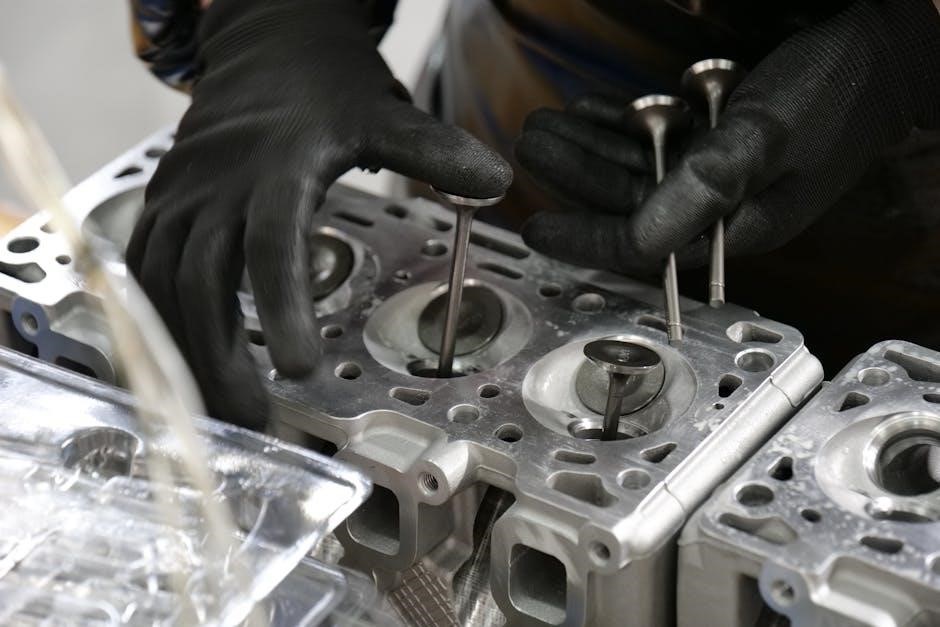
These manuals provide detailed, step-by-step instructions for procedures such as valve and engine brake lash adjustments. The PDF documents available cover everything from identifying valve adjustment marks (VS marks) to rotating the engine to TDC and utilizing feeler gauges for precise measurements. QuickServe is an invaluable resource for professional technicians and owner-operators alike, ensuring accurate and efficient engine upkeep, and access to the latest updates and revisions.
Cummins ISX Fuel System PDF Manuals
While primarily focused on fuel systems, Cummins ISX fuel system PDF manuals often contain supplementary information relevant to overall engine maintenance, indirectly aiding valve adjustment procedures. These resources detail the intricate components of the fuel system, providing a broader understanding of engine operation. Accessing these manuals, alongside dedicated valve adjustment guides, can be beneficial for diagnosing related issues.
Resources like the “Cummins ISX топливная система 02-05.pdf” (translated: Fuel System 02-05.pdf) offer detailed schematics and troubleshooting steps. Though not directly about valve lash, understanding fuel system interactions can help identify contributing factors to engine performance. Remember to utilize QuickServe to locate the most accurate and up-to-date manuals specific to your engine’s serial number for comprehensive support.
Dash Valve Service Procedures PDF
Although seemingly unrelated, Dash Valve service procedures PDF manuals can offer valuable context when performing a comprehensive Cummins ISX engine overhaul, which includes valve adjustments. These documents detail the operation and maintenance of the dash valves, crucial components influencing engine performance and emissions control. Understanding their function can aid in diagnosing issues that might seem unrelated to valve lash but impact overall engine health.
The “Сервисные процедуры для коллектора Dash Valve.pdf” (translated: Service Procedures for the Dash Valve Manifold.pdf) provides detailed instructions for inspection, repair, and calibration. While not a direct guide to valve adjustment, a properly functioning dash valve system ensures optimal engine operation, contributing to accurate valve timing and overall efficiency. Access these resources alongside dedicated valve adjustment guides for a holistic approach.